

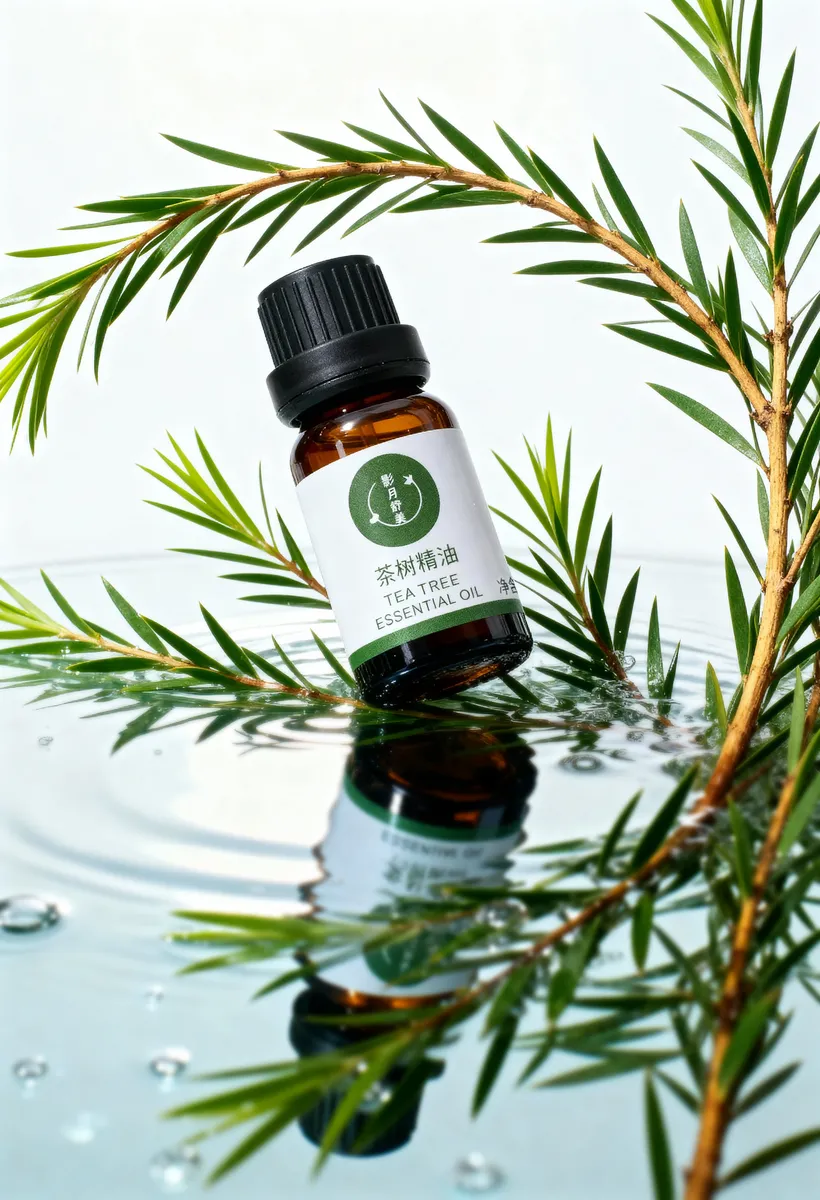
Tea Tree Essential Oil
$39.00
Tea Tree Essential Oil and Traditional Chinese Medicine Wellness: Balancing Body and Mind with Natural Power
“Multi-purpose oil”
Enters the Lung Meridian and the Spleen Meridian
Common benefits: clearing heat and detoxifying, dispelling wind and dampness, and killing parasites to relieve itching
Introduction
In the treasure trove of aromatherapy, tea tree essential oil is renowned for its exceptional antibacterial and anti-inflammatory properties. However, when viewed through the philosophical views of Traditional Chinese Medicine (TCM), it transcends its identity as a mere essential oil defined by modern science. Instead, it becomes a “natural medicinal substance” with unique properties—nature, flavor, and meridian tropism—deeply aligned with the theoretical framework of TCM. Its approach to health and wellness exemplifies a harmonious integration of ancient and modern wisdom.
I. The "TCM Properties" of Tea Tree Oil: Nature, Taste, Meridian Affinity, and Efficacy
From the perspective of TCM theory, all things possess medicinal properties. Tea tree oil has a pungent and refreshing aroma, a cool nature, and a slightly bitter taste. Its pungent nature enables it to disperse and circulate, promoting diffusion, moving Qi, and invigorating blood. Its cool nature clears heat, purges fire, and detoxifies, while its bitter taste drains and dries, clearing heat and drying dampness.
It primarily enters the Lung Meridian and the Spleen Meridian.
• Lung Meridian: The lungs govern the skin and body hair and open into the nose, closely related to respiratory health. Tea tree oil can diffuse lung Qi and clear lung heat, making it beneficial for managing external wind-heat conditions and purifying the respiratory system.
• Spleen Meridian: The spleen governs transportation and transformation and prefers dryness over dampness. The dampness-drying property of tea tree oil helps resolve damp turbidity in the middle burner (spleen and stomach), improving skin issues caused by internal damp-heat (such as oiliness and acne).
Thus, its core efficacy is: clearing heat and detoxifying, dispelling wind and dampness, and killing parasites to relieve itching. This aligns closely with the TCM approach to treating warm pathogen diseases, eczema, scabies, and other conditions caused by “damp-heat toxic pathogens.”
II. Health Preservation Applications: External Treatments for Balancing
TCM emphasizes that “the principles of external treatment are the same as those of internal treatment.” As an important medium for external treatments, tea tree oil can be incorporated into daily health preservation in various ways.
1. Diffusing the Lungs and Preventing Epidemics, Purifying the Air (Acts on the Lung Meridian)
– Application: During flu season or when experiencing respiratory discomfort, add 5 drops of tea tree oil to a diffuser with 250ml for aromatherapy.
– TCM Interpretation: Its pungent dispersing property can diffuse lung Qi and circulate defensive Qi (the body’s first barrier against external pathogens). Its aromatic quality can “ward off foul turbidity,” neutralizing “turbid toxic pathogens” in the air, effectively preventing external wind-heat and warm pathogens. This method is particularly suitable for the damp-heat conditions of spring and summer.
2. Clearing Heat and Drying Dampness, Nurturing the Skin (Acts on the Lung and Spleen Meridians)
– Application: For damp-heat acne, minor back rashes, or mild eczema, dilute 1-2 drops of tea tree oil with a carrier oil (such as jojoba oil or kukui nut oil) and apply sparingly to the affected area.
– TCM Interpretation: Skin issues are often related to “dampness,” “heat,” and “toxins.” The cool nature of tea tree oil clears heat, its bitter taste dries dampness, and its pungent property helps expel toxins. It effectively clears local damp-heat toxins, promoting skin balance.
3. Eliminating Dampness and Relieving Itching, Cleansing Personal Spaces
– Application: Add a few drops of tea tree oil to water for cleaning furniture, mopping floors, or washing machines.
– TCM Interpretation: Damp environments easily breed mold and bacteria, which TCM views as “damp turbidity.” Tea tree oil can eliminate dampness and kill parasites, clearing this “environmental damp pathogen” to create a dry and clean living space externally. This aligns with the TCM concept of “harmony between humans and nature,” indirectly supporting the metabolism of internal dampness.
4. Calming the Mind and Refresing the Spirit, Regulating Qi Flow
– Application: Inhale the aroma of tea tree oil when feeling drowsy during work or study.
– TCM Interpretation: Aromatic substances have the function of “opifying the orifices” and refreshing the mind, regulating stagnant Qi, boosting mental clarity, and alleviating dizziness and brain fog caused by stress.
III. Contraindications and Precautions: Aligning with TCM Diagnostic Principles
While tea tree oil is beneficial, it is not suitable for everyone. The core of TCM lies in “treatment based on pattern differentiation,” and the use of essential oils should follow this principle.
• Constitution Differentiation: Due to its cool nature, individuals with deficient-cold constitutions (e.g., those who are often cold, have cold hands and feet, or loose stools) should use it cautiously or in small amounts to avoid further damaging Yang Qi.
• Stop Once the Condition Improves: As a “medicinal substance,” its pungent dispersing power is strong. Once symptoms improve, discontinue use to prevent depleting the body’s righteous Qi.
• Special Populations: Pregnant women, infants, and individuals with highly sensitive skin should use it cautiously. Always perform a patch test before use.
IV. Conclusion
Tea tree oil, a generous gift from nature, finds its health preservation value deeply understood through the interpretation of TCM theory. It is not only a product of modern technology but also a natural medicinal substance bridging ancient and modern times. By wisely utilizing its properties to clear heat, detoxify, eliminate dampness, kill bacteria, diffuse lung qi, and regulate qi flow, and incorporating it as an auxiliary external treatment into overall lifestyle care, we can truly practice the TCM wisdom of “preventing disease” and “balancing Yin and Yang,” achieving holistic health and harmony from within.