
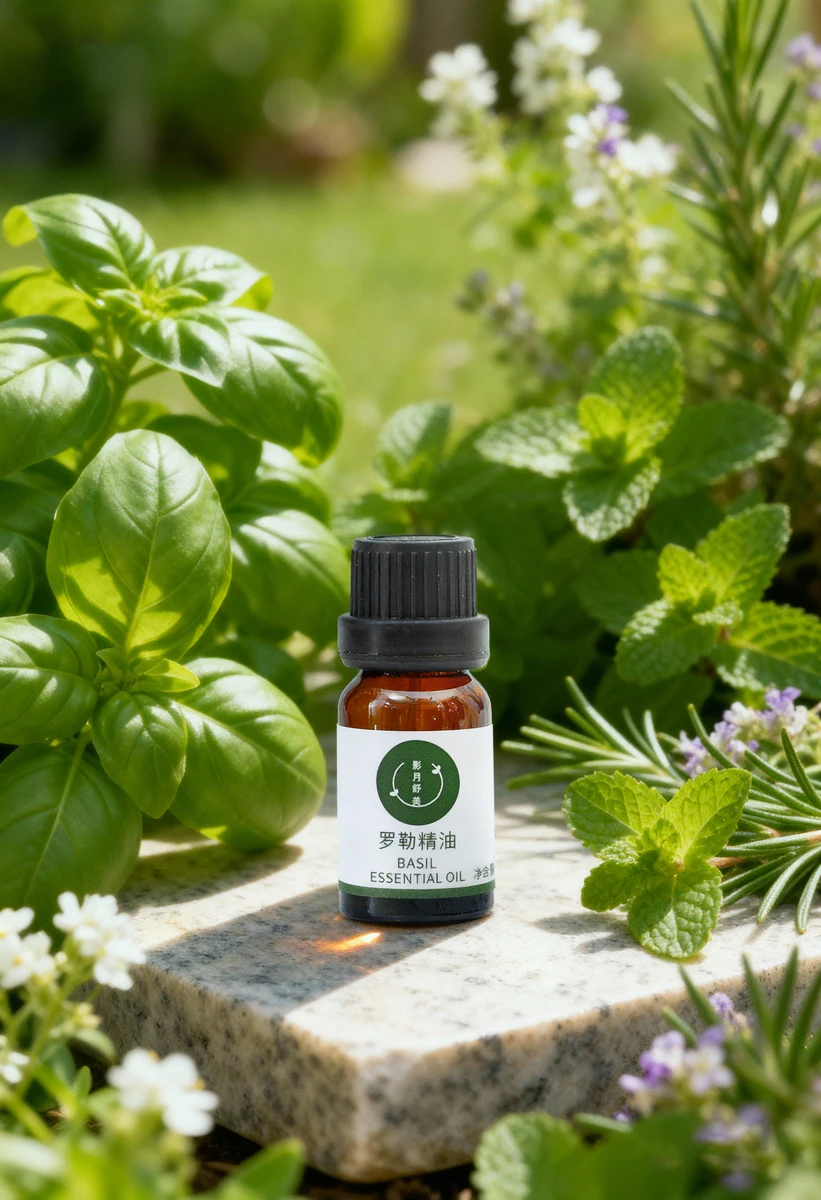
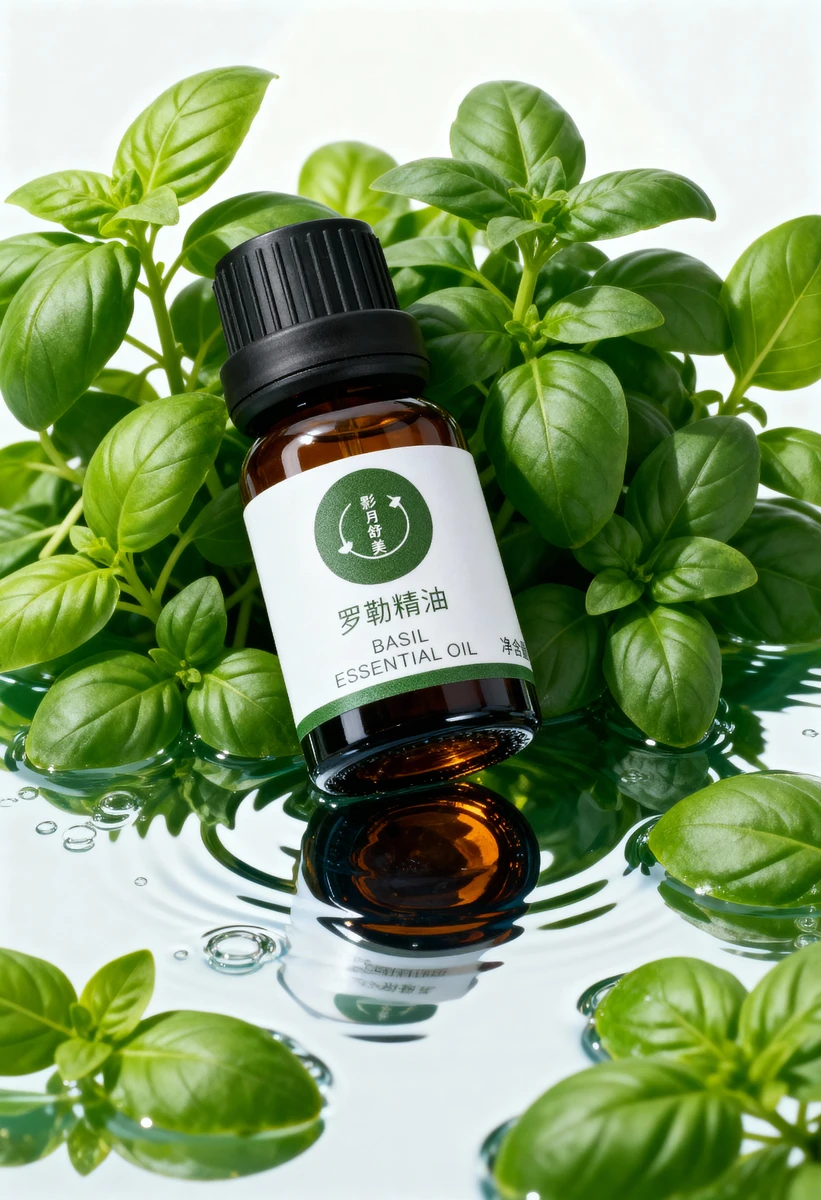
Basil Essential Oil
$45.00
Basil Essential Oil: Warming, Unblocking, and Awakening the Spleen—A Traditional Chinese Medicine Approach to Wellness
“King of herbs”
Enters the Spleen, the Stomach, the Lung Meridian
Common Benefits: awakening the spleen and promoting appetite, resolving dampness and harmonizing the middle, and releasing the exterior.
Introduction
Within the framework of Traditional Chinese Medicine (TCM), stagnation of qi and internal accumulation of dampness and turbidity are core pathological mechanisms underlying many modern subhealth conditions. Basil essential oil, with its pungent and warming properties, serves as a natural remedy to awaken the spleen, relieve stagnation, and regulate the Sanjiao (Triple Burner). It profoundly embodies the TCM treatment wisdom of “dredging qi and blood to restore free flow and harmony.”
I. Basil and Its Role in TCM Pattern Differentiation
Known as the “king of herbs” in traditional medicine, basil is characterized in TCM by its strong, pungent aroma, warm nature, and meridian affinity to the spleen, stomach, and lung. Its functions include awakening the spleen and promoting appetite, resolving dampness and harmonizing the middle, and releasing the exterior to dispel pathogens. It is particularly suitable for patterns such as damp-cold obstructing the spleen, liver-stomach disharmony, or external wind-cold invasion, which may manifest as abdominal distension, poor appetite, nausea, vomiting, or heaviness in the head and body. Extracted through modern steam distillation, the essential oil is rich in active compounds like linalool and methyl chavicol, offering dual benefits of aromatic spleen awakening and meridian unblocking.
• Awakening the Spleen and Resolving Dampness, Harmonizing the Middle and Directing Qi Downward
The spleen governs transportation and transformation and prefers dryness over dampness. The pungent, warm, and drying nature of basil essential oil makes it effective for awakening the spleen and resolving dampness. It is beneficial for poor appetite, abdominal distension, and a sticky taste in the mouth caused by damp-cold obstructing the spleen. Applying 2–3 diluted drops to acupoints such as Zhongwan (CV12), Zusanli (ST36), and Fenglong (ST40) can invigorate spleen yang and resolve damp turbidity, reflecting the TCM principle that “the spleen is the source of phlegm, and treating dampness without regulating the spleen is incomplete.”
• Soothing the Liver and Harmonizing the Stomach, Relieving Stagnation and Easing the Middle
This oil can soothe liver stagnation and regulate the qi dynamics of the spleen and stomach. It is suitable for epigastric distension and pain, belching, and acid reflux caused by liver qi invading the stomach. Its aromatic and moving properties can regulate the Sanjiao. Diluted massage on Taichong (LR3), Qimen (LR14), and Neiguan (PC6) can soothe the liver and stomach, direct qi downward, and stop vomiting, resonating with the description in the 《Compendium of Materia Medica》: “Basil regulates the middle, promotes digestion, and eliminates foul qi.”
• Releasing the Exterior and Dispelling Pathogens, Unblocking the Nasal Passages
Basil has the function of dispersing external pathogens, making it useful for nasal congestion, headache, and body aches caused by wind-cold invasion. Diffusion or diluted massage on Fengchi (GB20), Yingxiang (LI20), and Dazhui (GV14) can induce sweating, release the exterior, and unblock the nasal passages, embodying the TCM concepts that “the lung governs the skin and body hair” and “opens into the nose.”
• Unblocking Collaterals and Relieving Pain, Activating Blood and Dispelling Stasis
Basil essential oil can warm and unblock the meridians, dispel cold, and relieve pain. It is suitable for muscle soreness or joint cold pain caused by cold congealing in the meridians. Diluted local massage can activate blood and unblock collaterals, echoing the TCM treatment principle that “where there is blockage, there is pain; where there is free flow, there is no pain.”
II. Usage Precautions
1. Use with caution during pregnancy and in individuals with yin deficiency and fire excess.
2. Contraindicated for individuals with epilepsy.
3. Avoid long-term excessive use. Not for oral consumption.
III. Conclusion
Basil essential oil is not only a prized seasoning in Western cuisine but also an important herbal remedy in TCM aromatherapy for warming, unblocking, and awakening the spleen. With its pungent warmth and aromatic properties, it resolves dampness, harmonizes the middle, soothes the liver, and relieves stagnation—demonstrating the TCM wisdom that “smooth qi flow ensures recovery from disease.” As stated in the 《Dietary Therapy Materia Medica》: “Basil repels foul qi and regulates the middle burner.” This warm, spicy, herbal aroma carries the unique charm of integrated Eastern and Western wellness cultures.